

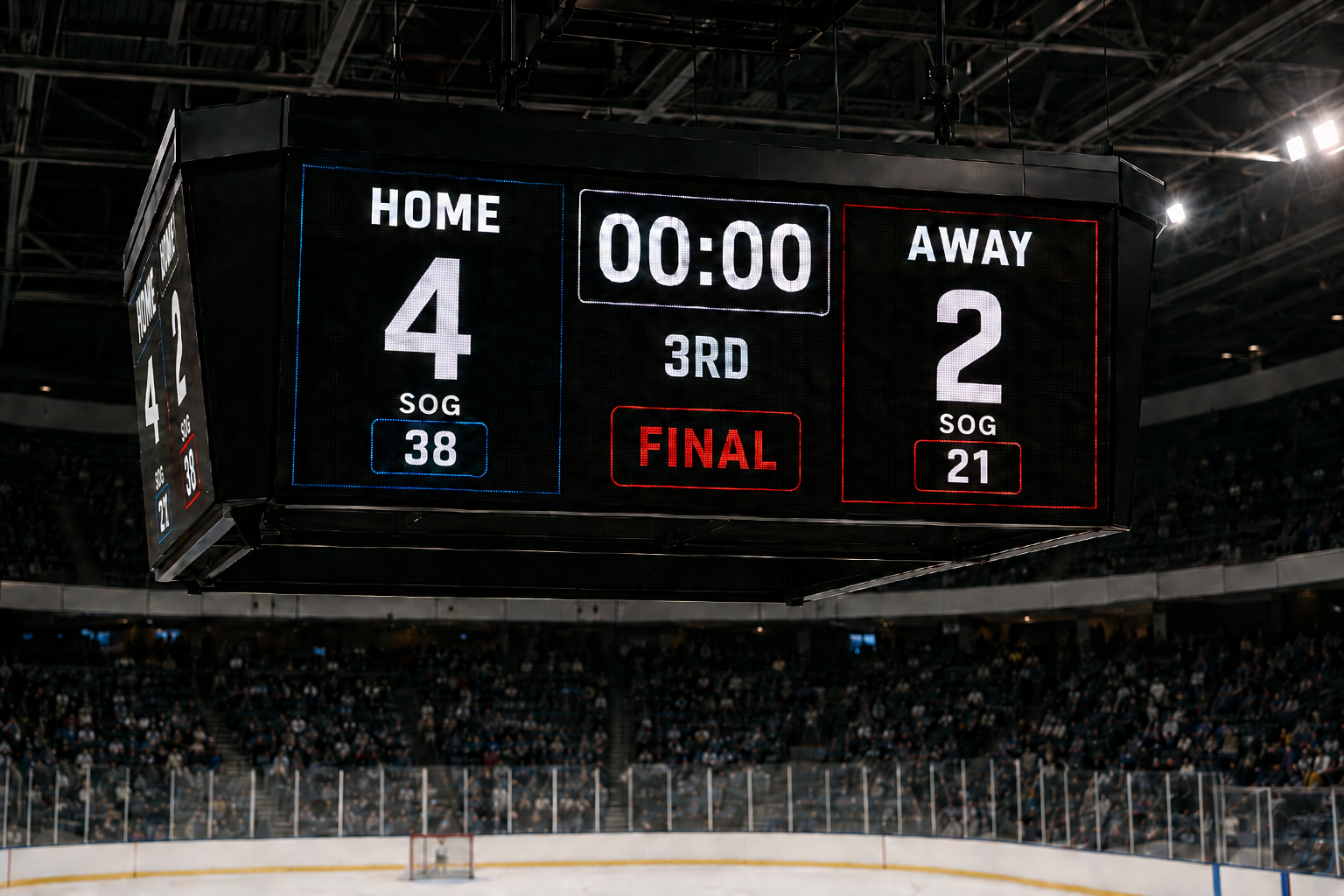
Most business owners think they’re managing performance. They’re not—they’re reacting to results. Revenue, profit, and cash flow are outcomes. They tell you what already happened—not what will happen next. That’s the problem.
Profit Is a Result
Profit is not a goal—it’s a result. It is created by a set of repeatable activities performed consistently over time. Yet most businesses don’t manage those activities. They manage the numbers that show up after the fact.
Your income statement tells you what happened. It does not tell you what to do next.
This Isn’t a New Idea
The idea that performance must be measured to be managed isn’t new. From Drucker’s Management by Objectives to Kaplan and Norton’s Balanced Scorecard, and more recently Doerr’s OKR framework, leading thinkers have reinforced the same principle:
Without measurable activities, execution breaks down. Nowhere is this more obvious than in sports.
What Sports Teach Us About Performance
In every sport, the scoreboard is a lagging indicator.
| Sport | Lagging Result (Outcome) | Leading Indicator (KPI) | What It Really Measures | Why It Wins |
|---|---|---|---|---|
| 🏒 Hockey | Win the game | Shots on Goal | Offensive pressure & puck control | More pressure = more scoring opportunities |
| ⛳ Golf | Lower Score | Greens in Regulation (GIR) | Approach shot consistency | More greens = fewer strokes |
| 🏈 Football | Win the game | Turnover Differential | Ball security & defensive disruption | Extra possessions drive wins |
| ⚾ Baseball | Win the game | On-Base Percentage (OBP) | Ability to create base runners | You can’t score without runners |
| 🏀 Basketball | Win the game | Effective FG% (eFG%) | Shot quality & efficiency | Better shots outperform volume |
The best teams don’t manage the score—they manage the few activities that make the score inevitable.
The Gap in Business
Canadian data tells a consistent story. BDC research shows many small businesses lack formal performance measurement systems. Statistics Canada has found that firms using structured management practices consistently outperform those that do not. At the same time, RBC data suggests most owners remain focused on revenue, costs, and cash flow—important metrics but ultimately lagging indicators.
The issue isn’t effort. It’s measurement.
Why Business Owners Don’t Measure
In my experience, most business owners don’t avoid measurement because they disagree with it—they avoid it because it feels unclear or complex.
Common challenges include:
- They don’t know what to measure
- They don’t have clear outcomes
- They can’t link activities to results
- They overcomplicate the problem
- They lack a simple system to track it
So, they default to what’s easy: reviewing financials and reacting.
A Simple Example
Let’s say you’re introducing a new product or service. Let’s call it Product X. You’ve done the work—market research, pricing, materials. Now you need traction.
One way to generate it is by calling your existing customers. Instead of tracking revenue first, track the activity:
- Set a weekly target (e.g., 10 conversations about Product X.)
- Record how many Product X calls made
- Review the number weekly
- Adjust as needed
At the same time, track the results separately in your financials. Your income statement shows the outcome. Your activity scorecard shows the behaviour driving it.
The Scorecard
If you want to manage performance, you need a simple system. A basic scorecard will do:
- Track weekly activity (not monthly results)
- Focus on a small number of key actions
- Set clear targets
- Review consistently
Over time, patterns emerge. You’ll see what moves the business—and what doesn’t. Here is how I set up the metric for introducing Product X.

What To Do Next
If you want to apply this through a project-based engagement:
- Identify one or two key issues in your business
- Define the outcome you want
- Determine the activity that would drive that outcome
- Set a weekly target
- Track it consistently
That’s it.
Final Thought
If you can’t clearly define your “shots on goal,” you’re not managing your business—you’re reacting to it. And over time, reaction is what kills performance.
Get in Touch
Ready to Talk It Through?
You don't need a fully formed idea. If something here resonated, or if you're just starting to think about what needs to change, reach out.